

United States: company formation and banking

 United StatesAmericas
- Default federal classification, single owner
- Disregarded entity (unless it elects corporate treatment)
- As of 2026-10-25 · [5]
- Annual information return, foreign-owned single-member LLC
- Form 5472 with pro forma Form 1120
- As of 2026-10-25 · [1]
- Federal BOI report for US-formed companies
- Not required (final rule effective 2026-08-14)
- As of 2026-10-25 · [3]
- States we typically form in
- Wyoming, Florida, New Mexico
Overview
A US LLC is a flexible and widely recognised vehicle. It comes into existence when articles of organization, or a certificate of formation depending on the state, are filed with that state, and its ownership and management are set out in a private operating agreement. Banks and payment providers expect to see both, together with an initial resolution authorising the first steps.
We typically form in Wyoming, Florida or New Mexico and choose between them on annual upkeep, privacy expectations and where any US activity will take place. State law governs the company; federal tax depends on how and where the business actually operates, not on the state you pick.
For owners outside the US the main obligations are informational: an EIN, an annual Form 5472 with a pro forma Form 1120, and state reports. Missing the federal form is expensive even when no tax is due, so the compliance calendar deserves attention from day one.
US LLC formation for international founders
A US limited liability company (LLC) is a state-registered company that non-US founders use to invoice clients, hold assets and access US payment rails. A single foreign owner's LLC is disregarded for federal income tax by default, but as of October 2026 it must still file Form 5472 every year.
Forming the LLC itself is quick; making it usable takes a little longer. Once the state accepts the formation filing, the company needs an operating agreement, an initial resolution and an EIN. Owners based abroad without a US Social Security or individual taxpayer number cannot use the IRS online tool and apply by phone, fax or mail instead.
You decide at formation whether the LLC is member-managed or manager-managed. In a member-managed LLC the owners run the company directly, which suits most single-founder businesses; in a manager-managed LLC, banks rely heavily on the operating agreement and the resolution to see who may sign.
Every year a foreign-owned single-member LLC files Form 5472 with a pro forma Form 1120, by fax or mail, because these returns cannot be filed electronically. The penalty for missing it is USD 25,000, whether or not any tax is due.
Redomiciled coordinates formation and introductions; independent US accountants handle filings and tax advice.
Who it suits
Online service businesses and agencies
You sell to clients worldwide and want a company that payment platforms and US customers recognise.
SaaS and e-commerce founders
You need US payment processors and marketplaces that expect a US contracting entity.
Single-venture holding
You want a simple limited-liability wrapper for one project, separate from your personal assets.
Founders testing the US market
You plan to sell into the US before committing to a corporation or local staff.
Requirements
- Required
Registered agent in the formation state
A local address for legal notices; the agent appears on the public filing.
- Required
Owner identification
Passport copies and proof of address for each member and manager, used at formation and again by banks.
- Required
Operating agreement
Private and not filed with the state, but expected by banks and payment providers even for a single owner.
- Required
EIN
The federal identification number needed for bank accounts, payment providers and filings.
- Depends on your case
Initial resolution
Often requested at onboarding to show the LLC authorised opening accounts and signing contracts; some providers fold it into the operating agreement.
- Depends on your case
US business address
Not needed for formation, though some providers ask for one.
Documents
- Articles of organization or certificate of formationPublic record filed with the state; confirms name, state, registered agent and management type.
- Operating agreementSets out ownership, management and how profits and losses are allocated.
- Initial resolution or written consentAuthorises first steps such as opening accounts and adopting the operating agreement.
- EIN confirmation letterIssued by the IRS; banks ask for it as proof of the number.
- Passport and proof of addressFor every member and, in a manager-managed LLC, every manager.
- Default federal classification, 2+ members
- Partnership (unless it elects corporate treatment)As of 2026-10-25 · [5]
- EIN application
- USD 0, issued by the IRSOnline only with an SSN or ITIN; otherwise by phone, fax or mailAs of 2026-10-25 · [2]
- Wyoming annual report licence tax
- From USD 60 a yearAs of 2026-10-25 · [4]
Timeline
- 1Choose state and structureWe agree the state, typically Wyoming, Florida or New Mexico, the company name and whether the LLC is member- or manager-managed.
- 2State filingThe formation document is filed through the registered agent; the LLC exists from acceptance.
- 3Governance documentsThe operating agreement and initial resolution are prepared and signed.
- 4EIN applicationFiled with the IRS by phone, fax or mail when the responsible party has no SSN or ITIN.
- 5Bank and payment provider onboardingApplications go to institutions matched to the business; each runs its own due diligence.
- 6Annual complianceState report or licence tax, plus Form 5472 with a pro forma Form 1120 every year.
Tax notes
- A single-member LLC is treated as a disregarded entity for federal income tax unless it elects to be taxed as a corporation. The LLC is not a separate taxpayer, and whether US tax arises depends on US-source or effectively connected income. LLCs with two or more members are partnerships by default, which brings its own federal filings.
- US tax becomes relevant when business is carried on in the United States through people, dependent agents or premises, or when certain US-source income arises. Many owners live and work abroad and serve clients remotely, but the facts of each case decide.
- Informational filings apply even when no tax is due: Form 5472 with a pro forma Form 1120 at federal level, plus state annual reports. Foreign-owned disregarded entities cannot file the federal form electronically.
- The United States has no federal VAT. Sales tax is a state matter that depends on nexus, and many service and digital businesses never reach a threshold. VAT where you or your customers are based is a separate question.
General information, not tax advice. Your position depends on your circumstances.
Banking fit
- Fintech and EMI providers are usually the quickest route for an LLC with non-resident owners; traditional banks may ask for a visit.
- Expect to explain the business model, customer locations and expected volumes, backed by contracts or invoices.
- Higher-risk activities such as crypto narrow the field; our network includes institutions that work with them, subject to their due diligence.
Questions
Can a non-resident open a US LLC bank account?
Yes, many banks and payment providers onboard LLCs with non-resident owners, often remotely. You will need the formation document, operating agreement, initial resolution and EIN. Each institution applies its own due diligence, so approval is never automatic.
Which state is best for a non-resident LLC?
We typically form in Wyoming, Florida or New Mexico. The right choice depends on upkeep, privacy expectations and where any US activity happens. For federal tax the state rarely matters; how and where you operate does.
What is Form 5472 and do I need to file it?
It is an IRS information return. A US LLC wholly owned by one foreign person files it every year with a pro forma Form 1120, even when no income tax is due. Not filing carries a USD 25,000 penalty.
How do I get an EIN without a Social Security number?
The IRS online tool requires a US principal place of business and an SSN or ITIN. Owners based abroad apply by phone, fax or mail instead. The IRS never charges for an EIN.
Does my US LLC have to report its owners to FinCEN?
Not at federal level. FinCEN's final rule, effective 14 August 2026, exempts companies formed in the United States from beneficial ownership reporting. State rules can differ, and banks will still ask who owns and controls the company.
Do I need to visit the United States to form an LLC?
No. Formation, the operating agreement and the EIN can all be handled remotely. Some banks prefer to meet in person, which is one reason we match clients with institutions that onboard non-residents remotely.
Banking in our network
We do not publish institution names: the right partner depends on your profile, and each institution keeps its own view on who it will serve.
9
Banking partners
- US banks and payment providers generally ask for the EIN, the formation document, the operating agreement and an initial resolution before onboarding. Approval stays subject to each institution's due diligence.
- Fintech and EMI providers often onboard LLCs with non-resident owners remotely; traditional banks may want to meet you in person. We match the institution to your activity rather than the other way round.
- Our US network spans corporate, EMI and crypto-friendly institutions. The banking assessment shows which of them suit your business model.
Questions
Can a non-US resident own a US LLC?
Yes. There is no citizenship or residency requirement to own an LLC. You need a registered agent in the state of formation, and for banking an EIN, which the IRS issues free of charge.
Do I have to pay US tax on my LLC's profits?
Not automatically. A single-member LLC is disregarded for federal income tax by default, so US tax depends on whether the income is connected with activity in the United States. Your home country may tax the profits; take advice there.
Does a US LLC still need a beneficial ownership report?
Not at federal level. FinCEN's final rule, effective 14 August 2026, exempts companies formed in the United States. Some states have their own disclosure rules, so check the state you form in.
Related guides

US LLC or Hong Kong Company? Which Is Right for Your Online Business
Most e-commerce and online service owners start with a US LLC and later look at Hong Kong as the business grows. Here's why, and which structure fits when.

Why Your US LLC Needs a Signed Operating Agreement to Open a Bank Account
If banks keep turning down your US LLC, the missing piece is often a signed, dated operating agreement. What it is, why banks ask for it, and the mistakes we see most often.
Videos
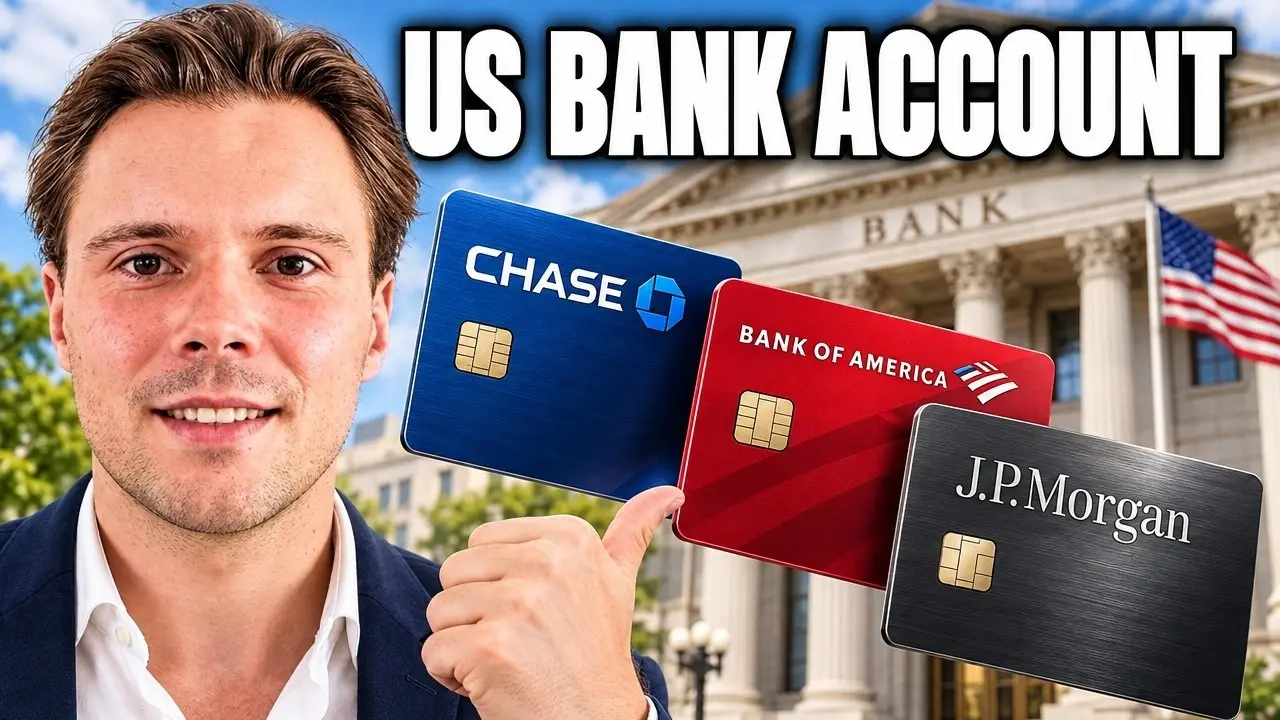
How to Open a US Bank Account as a Non-Resident in 2026
Want US banking without living in the US? There are four different routes for non-residents — from USD payment rails and US investments to business banking and personal accounts. Learn which setup fits your actual need and what banks look for before approving you.

Fastest Bank Accounts by Country (Tier List)
A tier list of how fast a bank account can be opened in Georgia, the USA, Switzerland, the UK, Panama and the UAE, and why the quickest account is not always the right one.

Which Bank Account Is Least Likely To Get Frozen?
Which banking jurisdiction is most likely to keep your account open? We compare the UK, Uruguay, Mauritius and the USA to see where entrepreneurs and global citizens get the best long-term banking stability and why structure matters more than most people think.
Sources
- 1.IRS: Instructions for Form 5472, retrieved 2026-10-25
- 2.IRS: Get an employer identification number, retrieved 2026-10-25
- 3.FinCEN: Beneficial Ownership Information Reporting (final rule, August 2026), retrieved 2026-10-25
- 4.Wyoming Secretary of State: business entity fee schedule, retrieved 2026-10-25
- 5.IRS: Limited liability company (LLC) classifications, retrieved 2026-10-25
- 6.Redomiciled case experience: US LLC documents and tax position (internal), retrieved 2026-10-25
Reviewed by the Redomiciled team on .
Plan your next step in United States.
Answer a few questions and we come back with a recommendation for your situation, without obligation.