Flávio Bolsonaro Left Brazil on an Italian Passport: What That Shows About Second Citizenship

My take
Until the runoff on 25 October, Flávio Bolsonaro was the favourite to become the next president of Brazil. Within days of losing the election, a Supreme Court judge had cancelled his Brazilian passports and barred him from leaving the country. He left anyway, reportedly crossing into Argentina on an Italian passport.
This isn't an article about whether he should have left. That is for Brazil's courts to decide. Leaving a country against a court order is a serious matter, and nothing here is a guide to doing that.
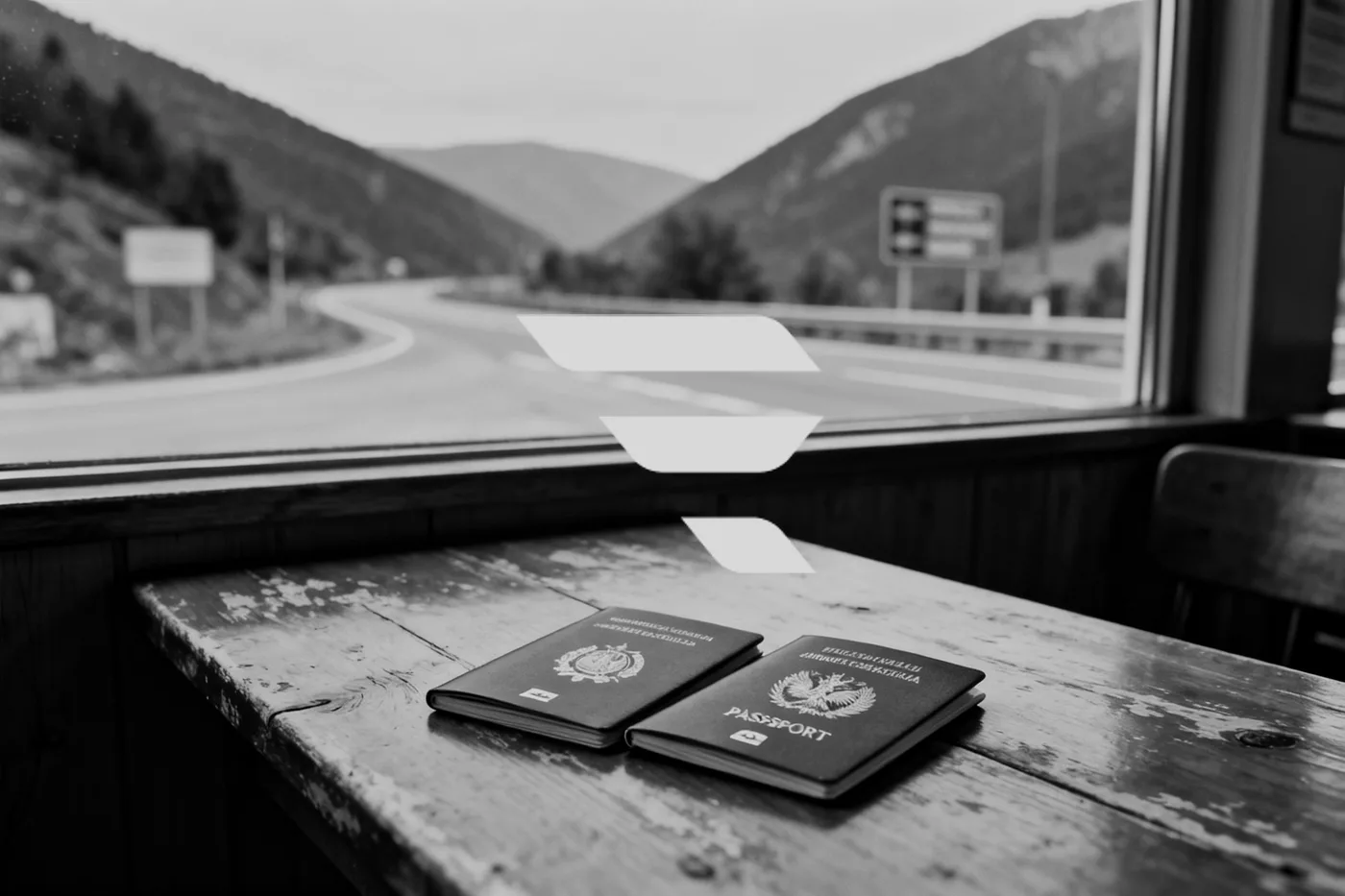
But set the politics aside, and this story shows something every global citizen should understand: the country that issues your passport can switch it off overnight. It can't switch off a passport issued by somebody else.
What happened in Brazil?
Flávio Bolsonaro, senator and eldest son of former president Jair Bolsonaro, won the first round of Brazil's presidential election on 4 October 2026 with 47.03% of valid votes, against 45.16% for President Lula (Superior Electoral Court count, as reported in October 2026). Markets bet heavily on him winning the runoff, and prediction markets gave him around an 80% chance.
On 25 October, Lula won the runoff with 51.79% to 48.21% (CNBC, October 2026), the first time since 1989 that a candidate has come from behind in the first round to win. Brazilian stocks fell sharply the next day.
On 26 October, as part of an ongoing investigation that he denies, a Supreme Court judge ordered Flávio to hand over all of his passports, including any issued by other countries, and barred him from leaving Brazil. When the deadline passed, the Federal Police cancelled his Brazilian passports.
On the night of 27 October, he crossed by land into Argentina with his family. According to sources quoted by AP and CNN Brasil, he used his Italian passport, having held Italian citizenship since 2023. From there, a charter flight took him via Guayaquil, Ecuador, to Miami, where he landed on 28 October. President Lula called the departure "shameful". Flávio said: "I did not flee Brazil, I left for Brazil's sake."
Why did he need the Italian passport?
A country controls its own passports. Brazil could cancel Flávio's Brazilian documents with one order, and it did. The court also demanded his Italian passport, but only Italy can withdraw an Italian passport. A Brazilian court can order you to hand one over. It can't make it invalid.
That is the whole point of a second nationality. It sits outside the reach of any single government. When one country changes its mind about you, for whatever reason, the other one hasn't.
Bolsonaro is an extreme case. For most people, it's simply about optionality in a world with increasing regulation.
He isn't the first
Garry Kasparov, Russia. Kasparov is a former world chess champion and one of the best-known critics of the Russian government. In 2013 he left Russia, and in February 2014 Croatia granted him citizenship. He has lived abroad ever since.
Thaksin Shinawatra, Thailand. Thaksin was Thailand's prime minister until a military coup removed him from power in 2006. He spent around 15 years abroad, and during that time Thailand revoked his passports. Montenegro granted him citizenship in 2009, which meant he could keep travelling. In 2023 he returned to Thailand.
Edmundo González, Venezuela. González was the opposition candidate in Venezuela's disputed 2024 presidential election, which the opposition and several governments, including the United States, say he won. Within weeks of the vote he had to leave the country, and in September 2024 he flew to Spain, where he was granted asylum. Without a second nationality, his way out depended on negotiations between governments.
Ordinary Venezuelans. This isn't only about politicians. Around 8 million people have left Venezuela, and for years getting or renewing a Venezuelan passport has been extremely difficult, with passports issued only in Caracas and at a handful of consulates. Venezuelans who also held a second nationality, through family ties to Spain, Italy or Portugal for example, had a way to travel, work and build a life that didn't depend on their own government's passport office.
What does this mean for the rest of us?
Most people will never be in Flávio Bolsonaro's position. Most people will never need to use a second passport in a hurry. That's fine. That isn't why you get one.
You get one for the same reason you insure your house. Not because you expect it to burn down, but because if it ever did, you'd want the option. A second nationality gives you choices that one government alone can't take away: where you live, where you bank, where your children can study, and where you can go if things change.
To be clear, these are extreme examples. Most people will never have a court cancel their passport or a government strip their citizenship. But the same thing happens on a smaller scale every day. A bank closes accounts for people who don't live in the country; our checklist for global banking access covers what banks look at. A tax regime you planned around is scrapped, like the UK's non-dom rules in 2025. A citizenship route doubles in length overnight, as Portugal's just has, from five years to ten. Italy narrows who qualifies for citizenship by descent. Brexit took away British passport holders' right to live and work freely in the EU.
None of these make headlines like Bolsonaro, but each one takes away an option someone was relying on. It's one more regulation after the next, and none of it is in your control. That's the real reason optionality matters.
What I'd actually do
Nobody knows which direction the world is going, and you can't anticipate every change. So don't try. Cover your bases instead.
For most people, I'd start with a second residency. It's the most underrated tool there is. In some countries you can hold a residency without having to live there full time, and simply go whenever you want; we compare three of them in Panama, Paraguay or Uruguay?
Because having options isn't only about being able to leave. It's also about being accepted somewhere else. A residency means there's already a country that has said yes to you.
Residencies also give you future optionality. Many of them can lead to a passport over time, if you put the years in. So you're not starting from zero if you ever need to move. You're starting from ten.
A second passport is the next step, if you want to go further. Check whether you qualify through your family first, because many people do and never look. Citizenship by investment is there if you want it sooner, but it costs a lot more. It all depends on your situation. The time to set this up is before you need it, as part of your wider global structuring.
Frequently asked questions
Can a country cancel your passport?
Yes. A government can cancel, refuse or withdraw its own passports, for example under a court order. It has no power to cancel a passport issued by another country.
Can you hold two passports?
Many countries, including Brazil, Italy, the UK and the US, allow dual citizenship. Some do not, so check the rules of every country involved before applying.
How do people get Italian citizenship?
Commonly through descent, marriage or long-term residence. Italy tightened its citizenship-by-descent rules in 2025 (Decree-Law 36/2025, converted into Law 74/2025), so eligibility through ancestry is now narrower than it was.
Is a second passport only useful for travel?
No. A second citizenship can give you the right to live, work, study and bank in another country, and a plan B if circumstances at home change.
Sources
- CNN Brasil: Como Flávio entrou na Argentina e nos EUA? Veja quais passaportes ele usou (as of October 2026)
- Brasil de Fato: PF apreende passaporte de Flávio Bolsonaro (as of October 2026)
- Newsweek: How Flávio Bolsonaro fled Brazil and reached Miami (as of October 2026)
- Brussels Signal: Brazilian court bars Flávio Bolsonaro from leaving and demands his Italian passport too (as of October 2026)
- CNBC and The Rio Times: Brazil runoff result (as of October 2026)
- Wikipedia: Garry Kasparov (as of November 2026)
- Croatia Week: Chess great Garry Kasparov obtains Croatian citizenship (as of February 2014)
- Wikipedia: Thaksin Shinawatra (as of November 2026)
- Bangkok Post: Thaksin and his Montenegrin passport (as of November 2026)
- Chronicle.lu (AFP): Venezuela opposition leader González lands in Spain seeking asylum (as of September 2024)
- The Boston Globe: Many Venezuelans want to go home. But they can't get passports (as of April 2026)
- Gazzetta Ufficiale (Italy): Law 74/2025 converting Decree-Law 36/2025 on citizenship (as of May 2025)
A note on this article. Redomiciled does not endorse any of the individuals mentioned in this article, and takes no position on the legal or political cases involving them. We don't believe a second citizenship should ever be used to get around a court order, the law, or the rules of any country. These examples are included only because they show, as a matter of fact, how quickly circumstances can change, and why having options in place matters.
This article is general information, not legal, tax or financial advice. Views in the "My take" and opinion sections are the author's own. Redomiciled coordinates with licensed local providers.
Ready to structure your global life?
See our articles first in Google Search.